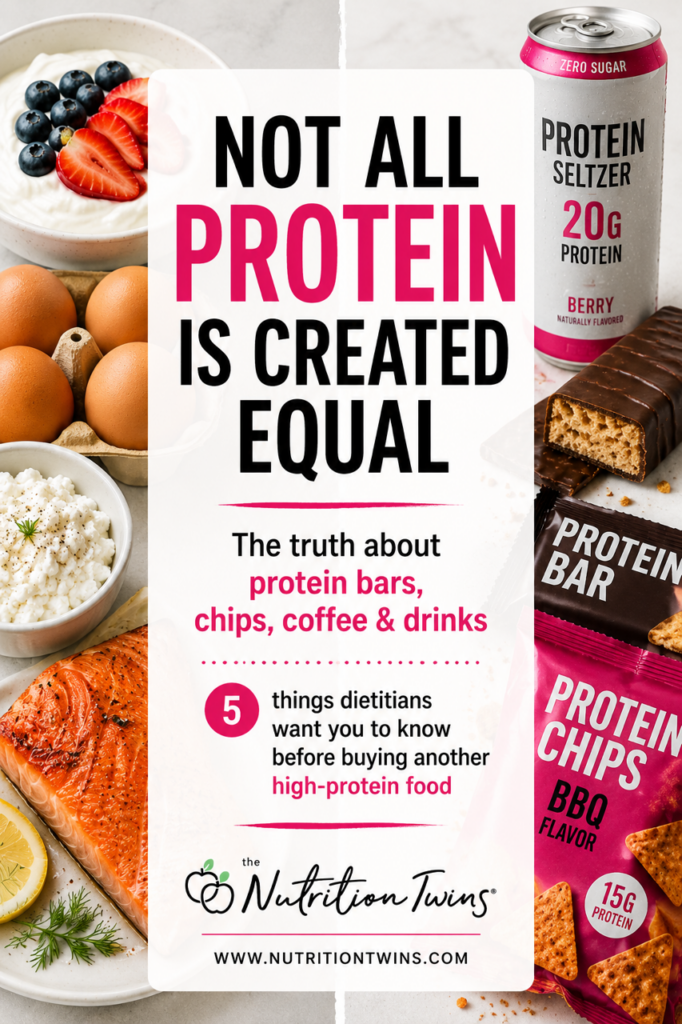
Walk down any grocery aisle or scroll social media and it’s impossible to miss: high-protein foods are everywhere. Protein chips, protein cookies, protein coffee, protein candy—and now even carbonated seltzer water with protein.
As registered dietitians and personal trainers, we understand why protein has become the star of the show. Protein is essential for muscle health, metabolism, blood sugar balance, satiety, and healthy aging. But here’s the truth most marketing leaves out:
Not all protein works the same way in the body—and many “high protein” products don’t deliver the benefits people expect.
At The Nutrition Twins®, we see this confusion every day in our practice. Clients tell us they’re hitting impressive protein numbers, yet still struggling with muscle loss, stubborn weight, cravings, or low energy. Often, the issue isn’t how much protein they’re getting—it’s the type, quality, and context of that protein.
Let’s break it down.
Why Protein Quality Matters More Than Protein Hype
Protein isn’t just a number on a label. The body responds very differently to protein from whole foods versus protein that’s been isolated, stripped of nutrients, and added to ultra processed products.
When you eat protein in its natural food form—like eggs, fish, Greek yogurt, beans, tofu, or poultry—you’re getting:
- Essential amino acids (including leucine, critical for muscle protein synthesis)
- Vitamins and minerals that support metabolism
- Healthy fats or fiber that improve satiety
- A food matrix that slows digestion and improves absorption
Many trendy protein products? Not so much.
The Problem With “Protein Added” Foods (Like Protein Seltzers)
One of the latest examples we’re seeing is protein infused carbonated seltzer. On the surface, it sounds appealing: zero sugar, low calories, and 20–30 grams of protein in a can.
But here’s what’s really going on:
1. The Protein Type Often Doesn’t Support Muscle Health
Many of these drinks rely heavily on collagen protein, often combined with smaller amounts of whey. What’s tricky is that labels don’t always disclose how much of each protein you’re actually getting.
Collagen does have benefits—such as supporting skin, joints, and connective tissue—but it is not a complete protein and is low in leucine, the amino acid that actually triggers muscle building and helps support a healthy metabolism as we age.
So if your goal is:
- Preserving muscle
- Improving body composition
- Supporting metabolism
…protein drinks where collagen is a large contributor won’t deliver the muscle support benefits many people expect.
2. Isolated Protein ≠ Whole Food Protein
Protein seltzers and similar products provide protein in isolation—without the nutrients that help your body use it effectively. There’s no fiber, no micronutrients, and no natural food structure to slow digestion or enhance satiety.
In practice, we often see people drink these and feel hungry shortly after—despite the high protein number.
3. Artificial Sweeteners and Gut Health Concerns
Many protein beverages and snacks rely on artificial or non nutritive sweeteners to keep calories low. Research suggests certain sweeteners may disrupt the gut microbiome in susceptible individuals, which can negatively impact appetite regulation and metabolism.
This may affect:
- Blood sugar regulation
- Appetite control
- Metabolic health
For people already struggling with weight resistance or digestive issues, this can quietly work against their goals.
4. Preservatives and Ultra Processing Add Up
One protein product may not be a big deal—but when protein bars, shakes, chips, and drinks become daily staples, the cumulative load of additives and preservatives matters.
Ultra processed foods are consistently linked to poorer metabolic health, even when calories and macros look “good” on paper. This is one reason we encourage a more whole-food nutrition approach whenever possible.
What’s more, when you think about processed protein rich foods like protein bars and protein powders, the protein is often concentrated. Like many concentrated foods, pesticides and environmental toxins may become more concentrated too. Some manufacturers use the least expensive protein sources they can find, which may increase the risk of contaminants like heavy metals and other toxins.
Other Common Protein Traps We See All the Time
Protein seltzers are just one example. Here are others we frequently see clients over relying on:
- Protein bars – often highly processed, low in fiber, and sweetened with sugar alcohols that can cause bloating, gas, and rebound cravings
- Protein chips and puffs – typically made from refined starches with added protein powder; easy to overeat and far less filling than whole food protein
- Protein coffee drinks – extremely popular and convenient, but when consumed alone they may blunt appetite temporarily without providing lasting fullness, leading to overeating later in the day
- Protein cookies, brownies, and candy – nutritionally closer to dessert with a protein halo
- Processed meats (deli meat, sausage, bacon) — often marketed as high protein, but classified as a Group 1 carcinogen by the WHO, meaning regular consumption is linked to increased cancer risk. Fine occasionally for most people, but shouldn’t be a daily protein staple.
These foods aren’t “bad,” but they shouldn’t be confused with protein sources that truly support muscle, metabolism, and long term satiety.
How to Choose Protein That Actually Works for Your Body
Instead of asking, “How much protein does this have?” we encourage asking:
✔ Is it a complete protein?
Look for protein sources rich in essential amino acids and leucine, which are especially important for supporting muscle health, such as:
- Eggs
- Greek yogurt or skyr
- Cottage cheese
- Fish and seafood
- Poultry and lean meats
- Soy foods (tofu, tempeh, edamame)
Beans and lentils are also excellent protein sources and provide fiber and important nutrients, although they are generally lower in leucine than animal proteins and soy foods.
✔ Is it paired with nutrients?
Protein works best when it’s part of a nutrient dense food or meal, not isolated on its own.
That can look like:
- Naturally nutrient rich protein foods (such as eggs, fish, yogurt, tofu, beans)
- Protein paired with fiber rich or healthy fat foods (for example: eggs with vegetables, yogurt with berries and nuts, beans with whole grains)
This combination slows digestion, improves blood sugar response, and helps you stay full longer.
✔ Is it minimally processed?
The closer a protein source is to its original form, the better your body tends to respond.
✔ Does it keep you full?
If you’re hungry an hour later, that protein likely isn’t doing its job—no matter what the label says.
Protein FAQ: What People Get Wrong About High Protein Foods
Are High-Protein Foods Good for Weight Loss?
High-protein foods can support weight loss by helping preserve muscle, increase fullness, and support metabolism. However, not all high-protein foods are created equal. Protein quality matters just as much as quantity.Is collagen a complete protein?
No. Collagen may support skin, joints, and connective tissue, but it does not contain all essential amino acids needed to optimally support muscle protein synthesis.
Are protein bars healthy?
Some can be helpful occasionally, but many are highly processed and contain artificial sweeteners, sugar alcohols, or lower quality protein sources.
Is protein coffee good for weight loss?
Protein coffee may help some people increase protein intake, but liquid protein and caffeine don’t always provide lasting fullness and can lead to rebound hunger later.
What’s the best protein for muscle health?
Complete proteins rich in leucine—such as eggs, Greek yogurt, fish, poultry, cottage cheese, and soy foods—are among the best options for supporting muscle health.
How can I tell if a protein product is healthy?
Look beyond the protein grams. Check ingredient quality, fiber, sweeteners, level of processing, and whether the protein source is complete.
A Smarter Way to Think About Protein
We’re all for convenience and we love that protein is having a moment. What we don’t love is marketing that oversimplifies nutrition and leaves people frustrated when the promised results don’t show up. You deserve better information than that — and that’s exactly why we’re here. Because when you get the right protein from the right sources, it truly delivers:
- Muscle health
- Metabolism
- Blood sugar balance
- Sustainable weight management
That comes from quality, balance, and personalization—not trends.1
Want more information? Check out our Instagram reel where we share the low down!
The Bottom Line
The protein craze has made it easier than ever to consume protein—but harder to know if it’s actually helping your body.
If you’re relying heavily on protein added snacks and drinks and still struggling with energy, cravings, muscle tone, or weight resistance, it may be time to take a closer look at how you’re getting your protein—not just how much.
Ready for a More Personalized Approach?
At The Nutrition Twins®, we help clients cut through nutrition noise and build a way of eating that actually works for their body, lifestyle, and goals—without extremes or gimmicks.
If you’re tired of chasing the latest food trend and want a smarter, science based plan that supports metabolism, muscle, and long term health, we’d love to help.
Learn more about working with us →http://www.nutritiontwins.com
Because nutrition shouldn’t feel confusing—and protein shouldn’t come with a marketing disclaimer.