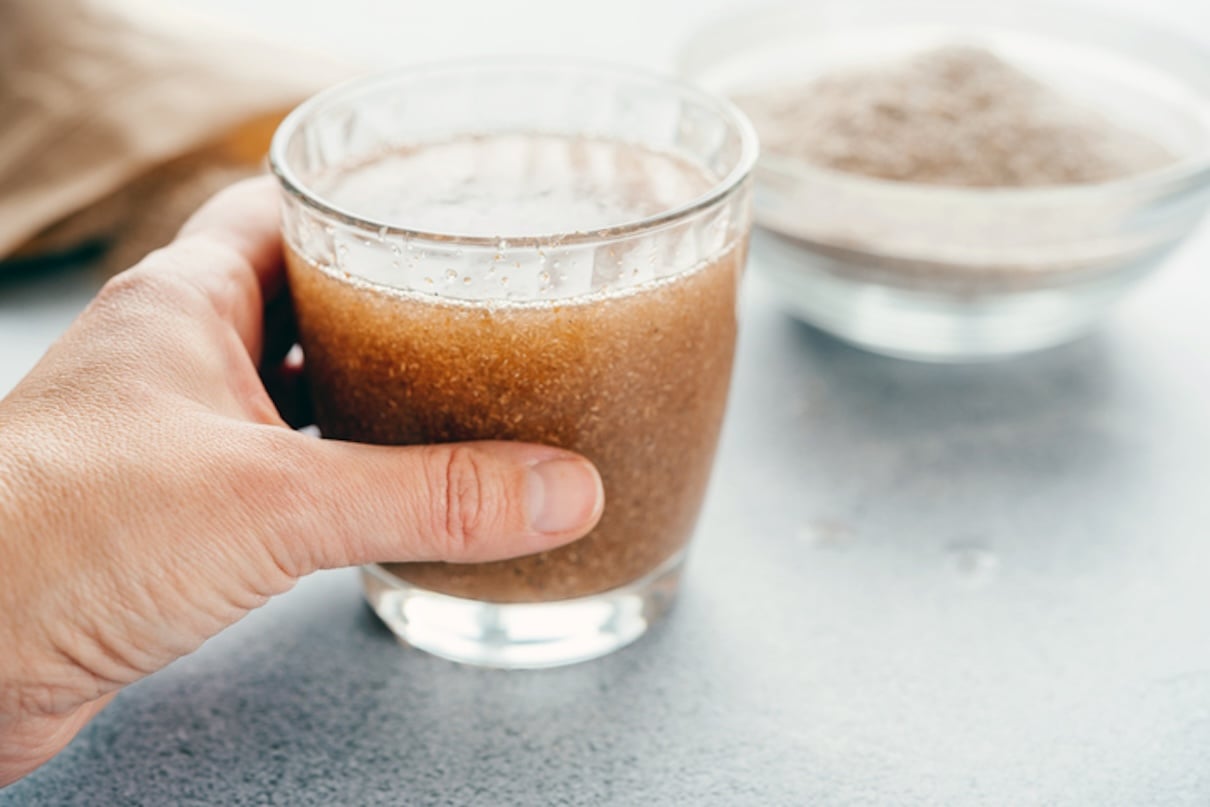
If your for you page has turned into a rotation of juice getting stirred into a jelly and captioned “gut glow,” you’ve met psyllium husk. It’s having a real moment in the wellness world right now, but unlike most TikTok trends, this one’s backed by solid research.
Here’s what psyllium husk actually is, why it’s trending, and what the science says it can (and can’t) do.
What Is Psyllium Husk?
Psyllium husk comes from the seeds of Plantago ovata, a plant grown mainly in India. The husk, the outer coating of the seed, is where all the action is: it’s made almost entirely of soluble fiber.
When psyllium husk meets water, it swells into a thick gel. That gel-forming property is the whole reason it works the way it does, whether it’s stirred into a glass of water or baked into a loaf of bread.
Why It’s Trending Now
Fiber has become one of the biggest stories in wellness, and psyllium husk is at the center of it. Between the gut-health boom, renewed interest in blood sugar balance, and a wave of “fiber-maxxing” content, this decades-old drugstore staple has found a new, younger audience that’s less interested in the Metamucil branding and more interested in what the research actually shows.
What the Research Says
Supports Regularity. This is psyllium husk’s original claim to fame. Because it absorbs water and forms a gel, it increases stool water content, which makes things easier to pass. A study on psyllium supplementation found meaningful shifts in gut bacteria and stool water content, with the most pronounced changes in people dealing with constipation.
Supports Healthy Cholesterol Levels. This is one of the most well-studied benefits of psyllium husk. A meta-analysis of controlled clinical trials found that psyllium consumption was associated with measurable reductions in both total cholesterol and LDL (“bad”) cholesterol, with effects that scaled with dose.
Supports Blood Sugar Balance. Because that gel slows digestion, psyllium husk can blunt how quickly sugar hits your bloodstream after a meal. A meta-analysis of 35 randomized controlled trials found that psyllium taken before meals led to significant improvements in fasting blood glucose among people with impaired glycemic control, with the biggest impact seen in those managing type 2 diabetes.
Feeds Your Gut Bacteria. Psyllium husk isn’t just moving through your gut; it’s feeding it. Research shows it can shift the makeup of gut microbiota, including increases in bacteria that produce short-chain fatty acids, which are key for gut health.
Are You Actually Getting Enough Fiber?
Here’s the RD gut check: most women need about 25 grams of fiber a day, but the average adult in the U.S. is only getting around 16 grams. That’s a real gap, and it’s one of the main reasons fiber has become such a hot topic, most of us are walking around under-fibered without realizing it.
Whole foods should always be doing the heavy lifting here: think beans, oats, berries, and vegetables. But if you’re consistently falling short even on a good week, psyllium husk is one of the more evidence-backed ways to close that gap without needing to eat your body weight in lentils.
How I’d Actually Use It
Here’s where I’ll be the dietitian in the room: I would never tell someone to jump to 20 grams of psyllium husk a day. That’s the kind of number that shows up in clinical trial protocols, not real life, and if your gut isn’t used to that much fiber, that “wellness routine” turns into a very bad afternoon.
My honest advice:
- Start low. A teaspoon (around 3–5 grams) mixed into a full glass of water, once a day, is plenty to start.
- Go slow. Give your gut a week or two before adding more. Ramping up too fast is the #1 reason people swear off fiber supplements forever.
- Water is non-negotiable. Psyllium husk needs fluid to form its gel. Take it dry, or without enough water, and best case you get uncomfortable bloating and gas; worst case, it can swell and thicken in the throat or gut, creating a real choking or blockage risk. Always mix it into a full glass (at least 8 oz) and drink it right away.
- Don’t take it right alongside medications. Because of how it gels and binds in the gut, psyllium husk can interfere with the absorption of certain medications. A general rule is to space it out by a couple of hours, but check with your pharmacist if you take anything daily.
Think of psyllium husk as a supporting player, not your entire fiber plan. It’s a smart tool for closing the gap between what you’re eating and what your body actually needs, not a replacement for the fiber-rich foods that should make up the bulk of your plate.
The Bottom Line
Psyllium husk isn’t a new discovery; it’s an old one getting new attention, and the research backs up why. Used thoughtfully (low, slow, and with plenty of water), it’s a legitimately useful tool for closing a fiber gap that most women are dealing with.